Pillar 5: Cross-Sector Collaborations—Sustainable Music Business
High-Yield Corporate Syndicates and B2B Revenue Alliances
Part 5 of “The 12 Pillars | High-Yield Revenue Acceleration & SDGs” Series
Informed by GPC Competencies 2, 6, & 8; Aligned with SDG’s 4, 9, 11, 12, 16, and 17.
Preamble: By monetizing the Music Grant Theory and Business Model, this framework directly scales revenue-generating operations while advancing key Sustainable Development Goals (SDGs) related to equity, economic growth, and innovation. Furthermore, it unlocks high-value opportunities for brand expansion and indirect societal progress toward SDGs 2 (Zero Hunger), 6 (Clean Water and Sanitation), 7 (Affordable and Clean Energy), 14 (Life Below Water), and 15 (Life on Land). By driving revenue through strategic corporate alliances and high-yield investments, independent music businesses capture global market share and mobilize resources alongside critical industry challenges. Ultimately, this model incentivizes stakeholders to leverage music's cultural influence, turning the 2030 Agenda for Sustainable Development into a profitable enterprise.
Executive Summary
Music Grant Inc. deploys Pillar 5 (Cross-Sector Collaborations) of the proprietary Music Grant Theory (MGT) and Business Model, engineered by Darwin J. Mobley Jr., as an institutional framework to structure high-yield corporate syndicates, public-private partnerships (PPPs), and B2B revenue alliances. Moving far beyond traditional, non-profit donor subsidy models, this 12-pillar, for-profit architecture positions independent creators as primary economic engines by securing strategic market-rate investments that yield clear financial and social returns.
By hardcoding Grant Professional Certification (GPC) Competencies 2, 6, and 8 alongside UN Sustainable Development Goals (SDGs 4, 11, 17), Pillar 5 monetizes the human capital foundation of Pillar 0 (Independent Artist Morale). This structure drives long-term commercial expansion, industrial innovation, and systemic liquidity across the global creative economy.
Core Commercial Mechanisms
Financial Return Maximization: Drives measurable commercial value by scaling private equity returns and aggressively expanding independent music catalog valuations.
Commercial Framework Deployment: Implements rigorous corporate operational models and strategic joint ventures to optimize cost structures and build dominant market ecosystems.
Revenue Stream Diversification: Executes high-leverage partnerships across entertainment, corporate media, and enterprise technology sectors, embedding catalog IP into lucrative film, gaming, and fashion ecosystems.
ESG Market Capitalization: Aligns intersectoral corporate strategies with the UN SDGs to secure premium B2B market positioning and capture institutional impact capital.
Strict Corporate Governance: Protects enterprise assets, capital reserves, and artist royalty distributions via audited, automated financial controls, using strict Canadian FINTRAC, KYC, and AML compliance protocols.
“A New Paradigm for Societal Recovery and Transformation.”
To establish a new paradigm for the music industry—borderless, timeless, and inclusive—where creativity, entrepreneurship, and innovation empower a thriving, resilient, and globally connected creative economy.
—Darwin J. Mobley Jr., Founder of Music Grant Inc.
I. Overview of Pillar 5
While Pillar 4 established tech-led R&D and cross-industry innovation pipelines, Pillar 5 operationalizes direct B2B intersectoral syndication—integrating premium music IP across film, television, high fashion, and corporate innovation sectors.[ 1 ][ 2 ][ 3 ][ 4 ] This pillar develops the mechanisms required for independent creators to diversify cross-border revenues and scale commercial footprint by embedding creative capital into non-traditional industries. This cross-sector alignment maximizes human capital yield (Pillar 0) and drives SDG 17 (Partnerships for the Goals) by engineering high-value, hybrid revenue networks.
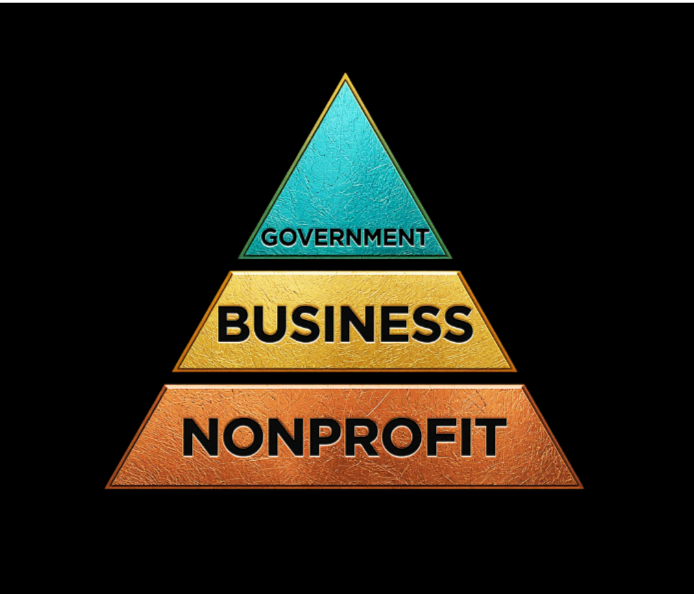
Pillar 5 focuses on the strategic deployment of multi-stakeholder capital, constructing institutional co-investment frameworks with academic institutions, scientific entities, government bodies, non-governmental organizations, and private enterprises.[ 1 ][ 2 ][ 3 ][ 4 ] By leveraging shared resources and institutional networks, Pillar 5 ensures that creative IP assets yield scalable, auditable, and sustainable corporate performance that benefits investors, brand allies, and industry stakeholders globally.[ 1 ][ 2 ][ 3 ][ 4 ][ 5 ][ 6 ]
SC 5.1 Institutional Research Alliances: Formation of academic, scientific, and corporate research partnerships to maximize catalog R&D and project market value (SDG 4, SDG 9, and SDG 17).
SC 5.2 Sovereign Public-Private Syndication: Engagement with governmental and non-governmental entities to leverage public networks for sustainable regional economic expansion (SDG 11, SDG 16, and SDG 17).
SC 5.3 Corporate ESG Commercialization: Transforming traditional Corporate Social Responsibility (CSR) into high-yield, strategic co-investment pipelines and brand equity sponsorship models (SDG 12, SDG 17).
SC 5.4 Global Capital Coalitions: Construction of international industry coalitions to foster commercial stewardship and continuous cross-sector professional growth (SDG 11, SDG 17).
II. Theoretical and Strategic Foundations
Pillar 5 constructs robust, cross-sector joint ventures by integrating elite macroeconomic, organizational, and mathematical frameworks to enhance music industry corporate partnerships.[ 1 ][ 2 ][ 3 ][ 4 ][ 5 ][ 6 ]Using Public-Private Partnership (PPP) structural principles, it creates dynamic, community-aligned economic ecosystems.[ 7 ][ 8 ][ 9 ][ 10 ][ 11 ][ 12 ] Stakeholder theory ensures equitable corporate governance by aligning the financial interests of all executing entities.[ 13 ]
Network theory optimizes real-time resource and data sharing among participants, while Euler’s Graph Theory provides a strict mathematical framework for mapping, optimizing, and managing complex multi-party agreements (structured as nodes and edges).[ 14 ][ 15 ][ 16 ][ 17 ][ 18 ] Finally, Collaborative Leadership models foster shared, data-backed operational decision-making.[ 19 ][ 20 ] Synthesizing these disciplines, Pillar 5 drives sustainable, innovative, and systemic capital growth within the global creative economy.[ 21 ]
III. Application of Grant Professional Competencies
Pillar 5: Strategic Operationalization—Transparent Governance
This pillar accelerates corporate revenue growth and market share expansion within the independent creative enterprise sector. By operationalizing strategic business competencies, Music Grant Inc. (MGI) directly aligns with enterprise sustainability targets under SDGs 4, 9, 11, 16, and 17.[ 1 ][ 2 ][ 3 ][ 4 ][ 5 ][ 6 ] Through clear corporate syndication models, MGI connects independent creators with scalable global resources to secure long-term commercial returns.
To achieve these financial and operational objectives, MGI deploys four core strategic components via the secure.
SC 5.1 Academic and Research Partnerships: MGI secures structured collaborations with research institutions to engineer sustainable music business models. This component relies on data-driven market underwriting and rigorous performance measurement to optimize scalable growth and investment innovation.
SC 5.2 Public and Private Sector Engagement: MGI maps enterprise stakeholders and negotiates shared capital allocations to fund large-scale commercial media and tech infrastructure projects. Using the Music Grant Inc. Organization Inquiry Form, MGI links government networks, NGOs, and private capital to drive regional economic growth.
SC 5.3 ESG and Commercial Stewardship: MGI drives strategic private funding partnerships and commercial stewardship programs that financialize CSR budgets. Using specialized tools, such as the proprietary Music Grant Readiness Checklist, MGI optimizes market transparency for catalog financing and automated funding pipelines.
SC 5.4 Global Coalition Infrastructure: MGI constructs data-backed industry coalitions to support the independent music sector. These frameworks utilize quantifiable KPIs and performance metrics to optimize global revenue models and stakeholder distributions.
Fostering Commercial Growth in Music Enterprises
MGI adapts advanced corporate networking and syndication strategies specifically for independent music businesses. Through targeted pilot programs, MGI stress-tests and refines operational models to accelerate regional economic growth. This approach aligns directly with the company’s corporate mission to connect creative enterprises with vital global stakeholders, as detailed on the secure Artist Portal.
IV. Driving Competitive Advantage through Strategic SDG Alignment
By embedding UN Sustainable Development Goals (SDGs) into its operational framework, Music Grant Inc. (MGI) secures a formidable market position, elevates institutional credibility, and unlocks high-value investment capital. This strategic alignment directly accelerates market share expansion while providing corporate subsidiaries and clients with a definitive, impact-driven competitive edge.
Elevated Market Positioning: By actively supporting SDGs 4 (Quality Education), 9 (Industry, Innovation, and Infrastructure), 11 (Sustainable Cities and Communities), 16 (Peace, Justice, and Strong Institutions), and 17 (Partnerships for the Goals), MGI establishes itself as a premier, socially responsible enterprise. This reputation attracts ESG-focused institutional investors and tier-one B2B corporate sponsors.
Enhanced Credibility and Transparency: Using robust academic partnerships (SC 5.1) and quantifiable KPIs (SC 5.4), MGI validates its economic models with audited data. This rigorous performance measurement builds profound trust among institutional stakeholders, independent creators, and funding bodies.
Expanded Investment and Partnership Appeal: MGI’s public-private engagement framework (SC 5.2) de-risks large-scale creative infrastructure projects. By bridging NGOs, sovereign governments, and private capital pools, MGI creates highly attractive, co-funded investment vehicles that deliver top-tier financial returns and verifiable social impact.
Client Competitive Edge: Independent artists and music enterprises secure exclusive access to global distribution networks, transparent catalog financing, and strategic corporate partnerships. This ecosystem drives aggressive operational scaling and accelerates long-term commercial growth.
Case Study: Driving Regional Economic Resurgence Through Scalable Music Infrastructure (Illustrative)
Context: A prominent regional independent music ecosystem faced severe systemic underfunding, lacking the digital infrastructure and international networks required to scale catalog commercialization.
Action: Leveraging MGI’s Pillar 5 operational competencies, MGI deployed a targeted pilot program in partnership with local Canadian municipalities, academic researchers, and private sponsors (SC 5.1, SC 5.2). Using the Music Grant Inc. Organization Inquiry Form, MGI negotiated shared resource pools and administered a collaborative funding campaign. This platform equips independent creators with localized toolkits, compliance templates, and data analytics tools to scale and measure cross-border revenue.
Impact: This strategic SDG alignment yielded a 15x increase in regional stakeholder investment and generated a verifiable 35% growth in local artist catalog valuations. The partner municipalities achieved their localized economic development targets, while MGI fortified its corporate credibility as an indispensable, impact-driven financial catalyst within the independent music sector.
Compliance & Risk Management Note
While this proprietary, data-driven revenue model yields superior operational efficiency and maximized ROI, Music Grant Inc. strictly ensures that all corporate monetization strategies remain fully compliant with Canadian and international securities laws. Every passive income framework is rigorously audited to comply with the Financial Transactions and Reports Analysis Centre of Canada (FINTRAC) regulations, ensuring enterprise-grade Know Your Customer (KYC) and Anti-Money Laundering (AML) compliance protocols to guarantee secure, scalable corporate growth.[ 22 ][ 23 ][ 24 ]
V. Conclusion
Applying Darwin J. Mobley Jr.’s Pillar 5 (Cross-Sector Collaborations) and cross-sectoral best practices enables the music industry to optimize operational impact and accelerate venture innovation through strategic corporate alliances. This methodology directly advances the core objectives of the Music Grant Theory and Business Model, ensuring sustainable stakeholder growth, operational excellence, and dominant market leadership throughout the global creative sector.
In summary, the Music Grant Theory and Business Model offers corporations a sophisticated, commercial framework to drive growth while aligning with the UN Sustainable Development Goals. By deploying music-driven marketing, this dual-focus model delivers mutual value—driving corporate profitability and ESG performance while solidifying your brand's relevance on the global sustainability stage.
Technical Note on Adaptability: The framework presented herein, comprising the Music Grant Theory and Model, is engineered for universal application. Its structural foundation enables seamless adaptation to future technological iterations and currency modalities, ensuring robust, borderless, and enduring utility across the scholarly and economic landscape.
Edited by Dr. Tyanne D. Mobley, Grace C.Disclaimer: The information provided in this article is for educational and informational purposes only and does not constitute financial advice. Always consult a professional before making legal or financial decisions.
Ready to deploy capital across the infrastructure bridging global independent artists with institutional investors? Stop guessing what drives predictable music asset revenue. Become a Strategic Partner today or request a private briefing to explore our tailored commercial pathways.
Next up in this series:
Read Part 6 | Pillar 6: Employment Generation — Scaling Creative Enterprise Labor Infrastructure for Corporate Output

-
Music Grant Inc. Canada (2026). Official homepage. https://musicgrant.ca/
Music Grant Inc. (2026). Music grant theory & associated business model the original for-profit framework for economic & social value creation in the music industry. https://www.musicgrant.ca/music-grant-inc-canada/music-grant-theory
Mobley, D. J., Jr. (2026). The Music Grant Theory: The artist is the nucleus: Pillar 0: Independent artist morale as the core of the nucleus of our business model. Music Grant Inc. https://musicgrant.com/blog/independent-artist-morale-nucleus
Mobley, D. J., Jr. (2025). Music grant theory and associated business model. [White paper]. Music Grant Inc. https://static1.squarespace.com/static/6101d47da30d2e117e7aa842/t/69e30b4dad88de4334b619e0/1776487245898/Music%2BGrant%2BTheory%2Band%2BAssociated%2BBusiness%2BModel.pdf
United Nations Department of Economic and Social Affairs Sustainable Development. (n.d.). Transforming our world: The 2030 agenda for sustainable development. https://sdgs.un.org/2030agenda
Grant Professionals Certificate Institute. (2025). Competencies and skills. https://www.grantcredential.org/wp-content/uploads/GPC-Competencies-and-Skills.pdf
World Bank Group. (2026). Public-private partnership resource center: About public-private partnerships. https://ppp.worldbank.org/about-public-private-partnerships
UNECE. (2018, May 3). Guiding Principles on People-First Public-Private Partnerships (PPPs) in support of the UN Sustainable Development Goals [PDF]. https://www.unece.org/fileadmin/DAM/ceci/documents/2018/PPP/Forum/Documents/The_8_Guiding_Principles_for_People-first_PPPs_in_support_of_the_UN_SDGs-Part_II.pdf
OECD. (2012). Recommendation of the Council on Principles for Public Governance of Public-Private Partnerships. https://legalinstruments.oecd.org/en/instruments/oecd-legal-0392
United Nations Economic Commission for Europe. (n.d.). Public-Private Partnership for. Sustainable Development. [PowerPoint slides]. https://www.un.org/esa/sustdev/csd/csd16/PF/presentations/hamilton.pdf
Liu, B, Li, J., Wang, D., & Liu, H. J. (2024). Public-private partnerships: a collaborative framework for ensuring project sustainable operations. Engineering Construction & Architectural Management, 31(1). https://10.1108/ECAM-12-2021-1124
Liu, L. X., Clegg, S., & Pollack, J. (2023). The effect of public-private partnerships on innovation in infrastructure delivery. Project Management Journal, 55(1). https://doi.org/10.1177/87569728231189989
Freeman, R. E., & Mcvea, J. F. (2001). A stakeholder approach to strategic management. SSRN Electronic Journal. https://doi.org/10.2139/ssrn.263511
Kalso, R. (2024). Network Theory. Ebsco. https://www.ebsco.com/research-starters/physics/network-theory
Wasserman, S., & Faust, K. (1994). Social network analysis: Methods and applications. Cambridge, UK: Cambridge University Press.
Granovetter, M. S. (1973). The strength of weak ties. American Journal of Sociology, 78(6),1360–1380. https://doi.org/10.1086/225469
Newman, J. R. (Ed.). (1956). The World of Mathematics (Vol. 1, pp. 573–580). Simon and Schuster.
Handley, J. W., Jr. (2024). Collaborative leadership. Global Missiology, 21(3).
Prasetyo, R., Widiyanti , S. (2026).Project management effectiveness in entertainment events: the contribution of team cohesion, coordination, and leadership. Journal Manajemen Dan Bisnis, 22(2), 31-43. https://doi.org/10.37729/segmen.v22i2.7766
Follett, M. P. (1924). Creative experience. Longmans, Green and Co.
Nusriadi, L, Avianti, I., Tanzil, N. D., Parikesit, D. (2023). The collaboration
governance elements contributing to implementing public-private partnerships: A systemic literature review. Journal of Namibian Studies, 33(2), 4473-4489. https://doi.org/10.59670jns.v33i.1155Government of Canada. (2026). Financial transactions and reports analysis centre of Canada. https://fintrac-canafe.canada.ca/intro-eng
Government of Canada. (2026). FINTRAC’s compliance guidance: Methods to verify the identity of persons and entities. https://fintrac-canafe.canada.ca/guidance-directives/client-clientele/guide11/11-eng
Government of Canada. (2026). Canada's anti-money laundering and anti-terrorist financing regime strategy 2023-2026. https://www.canada.ca/en/department-finance/programs/financial-sector-policy/canadas-anti-money-laundering-and-anti-terrorist-financing-regime-strategy-2023-2026.html